Examples / P-07
Housecall
In world
You hear the truck before anybody says anything, and then the whole street goes quiet in a way that has nothing to do with fear.
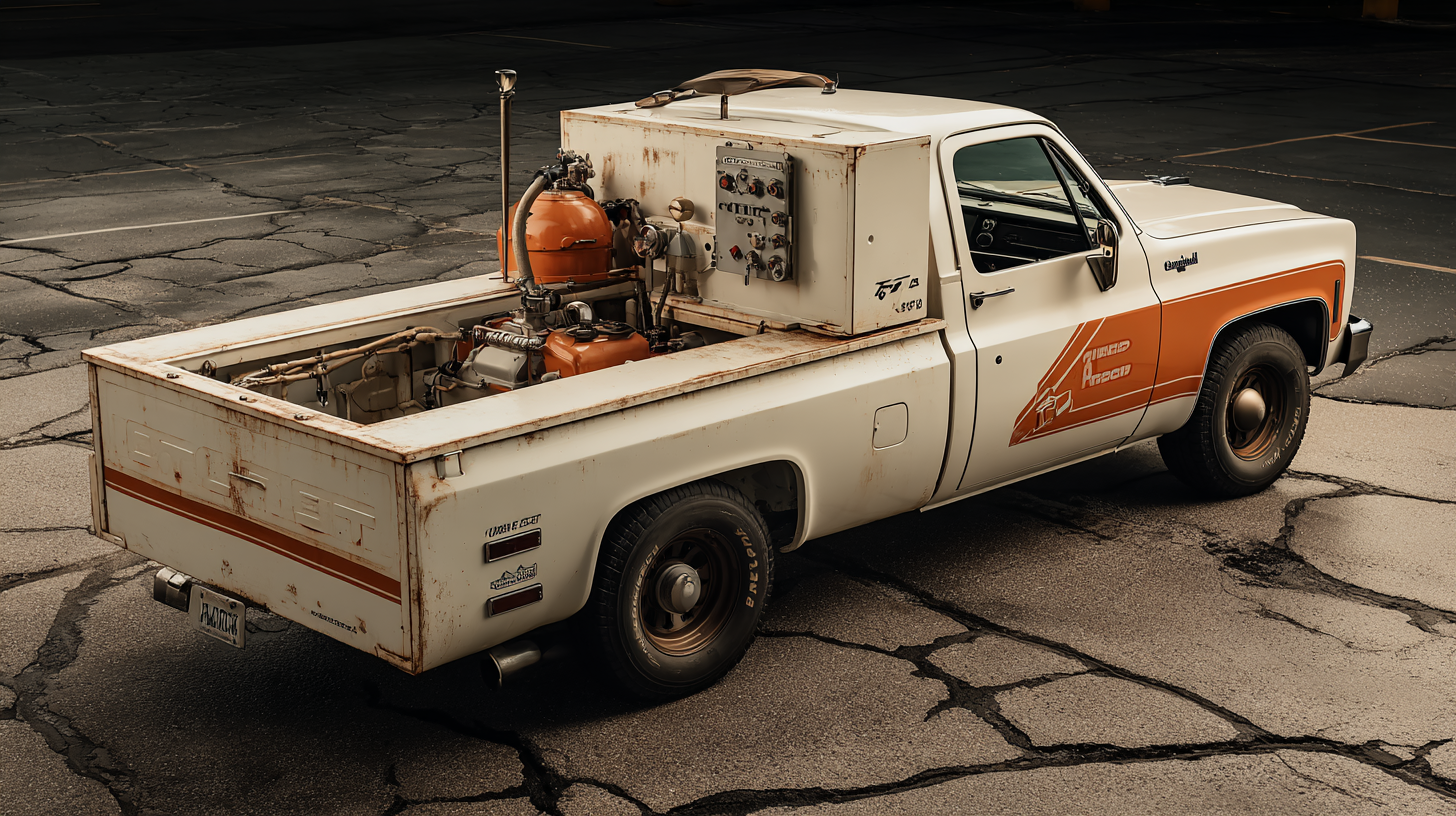
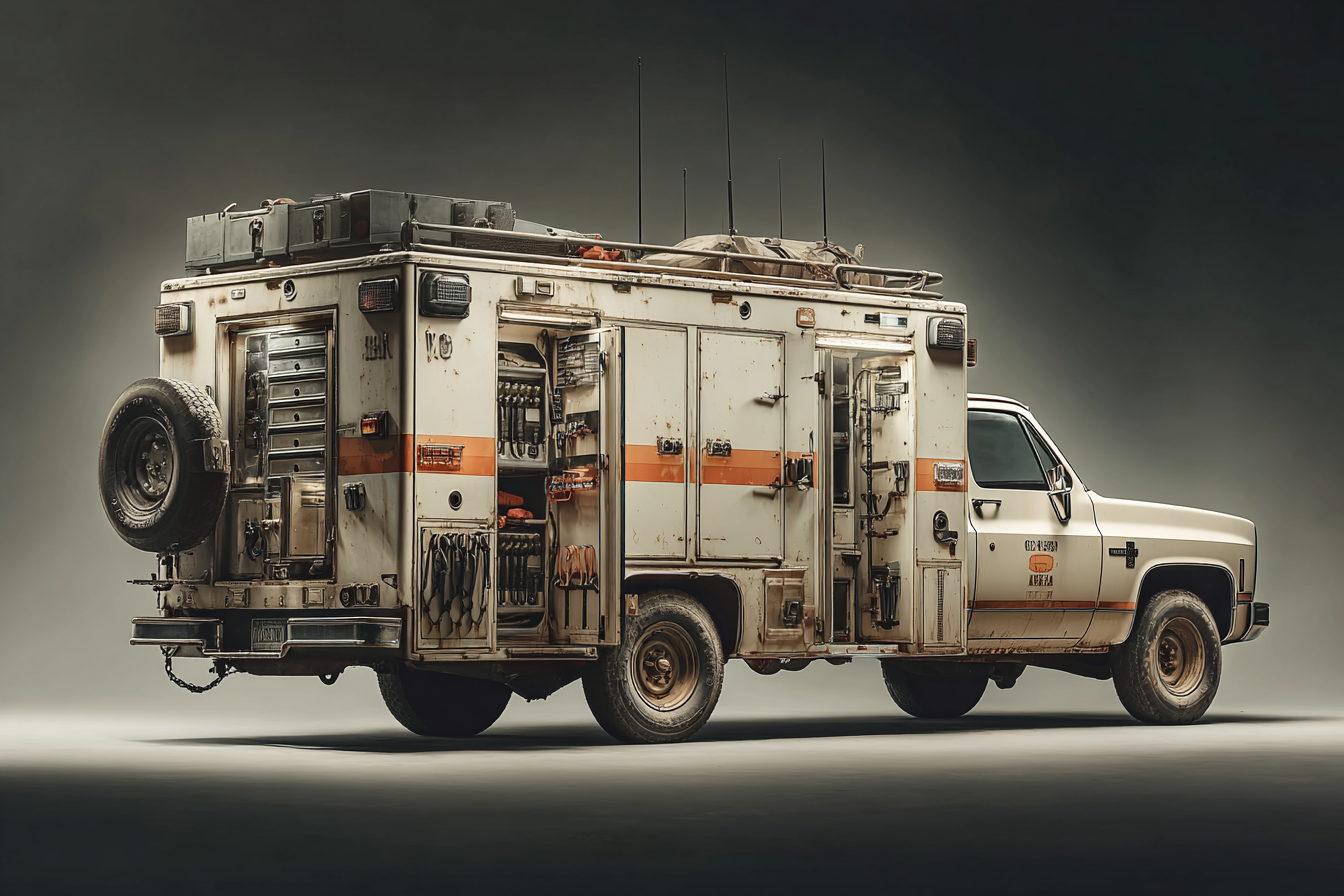
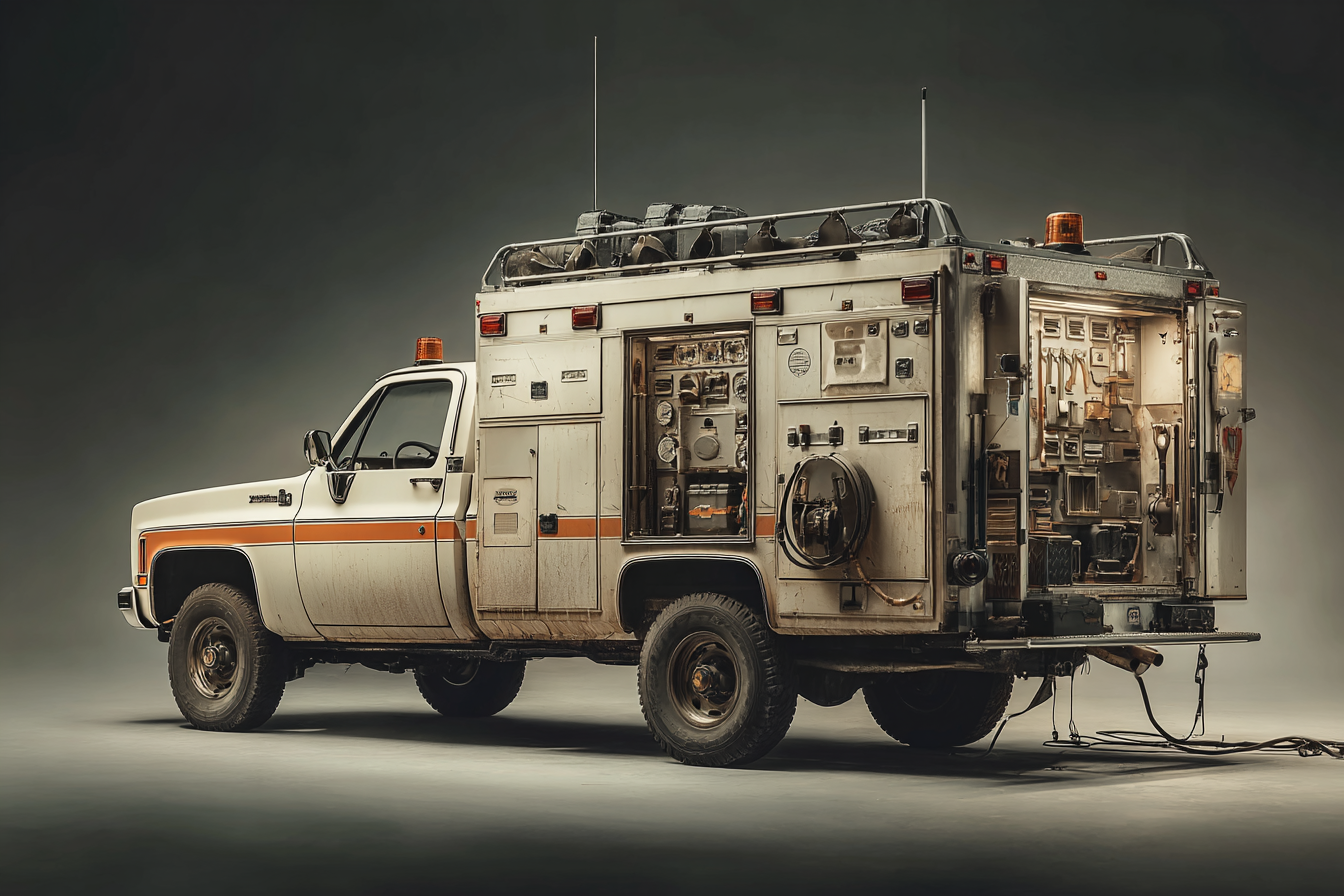
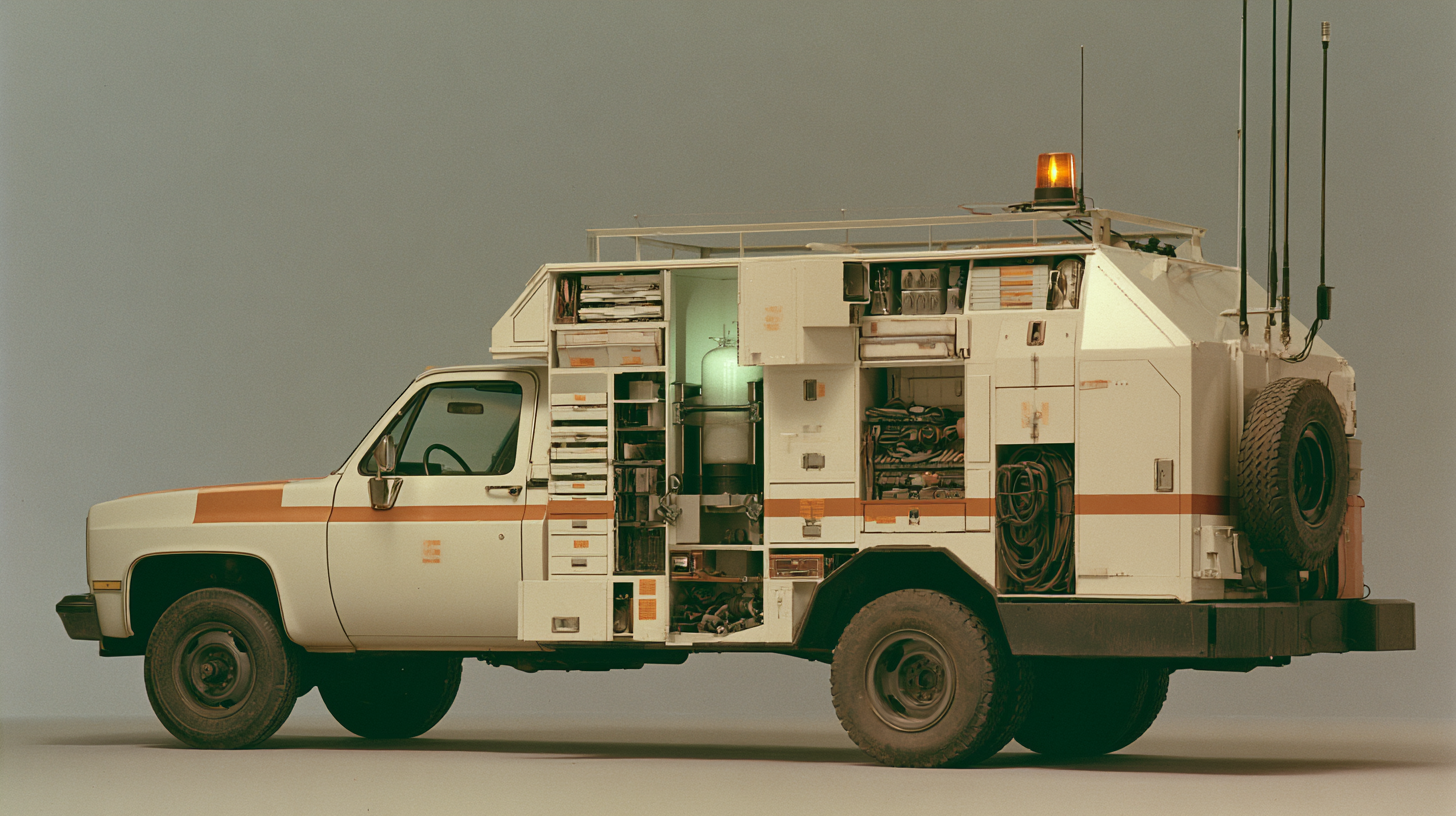
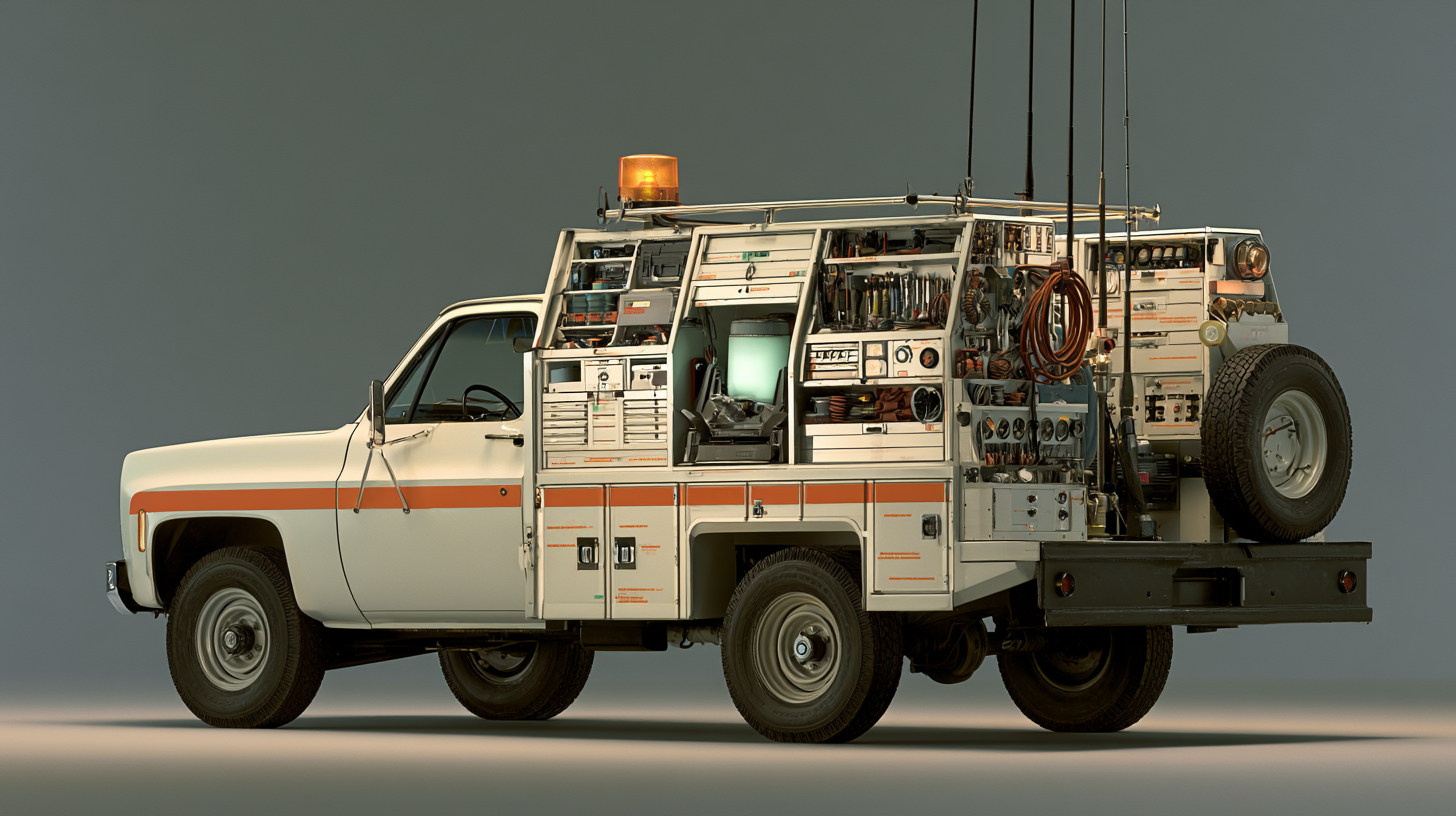
It is white. Not gray, not faded, white, and that is the part people cannot get past. A 1980s Chevy with a steel service body, an orange stripe down the side, orange unit numbers stenciled on the door. The paint is not just intact, it is touched up, feathered in at the door edge where somebody sanded a scrape and matched it by hand. The frame underneath tells the truth. Forty years of road salt, stone chips, and welded repairs, all of it left showing on purpose. The GPF does not hide the miles. They just refuse to let the miles win.
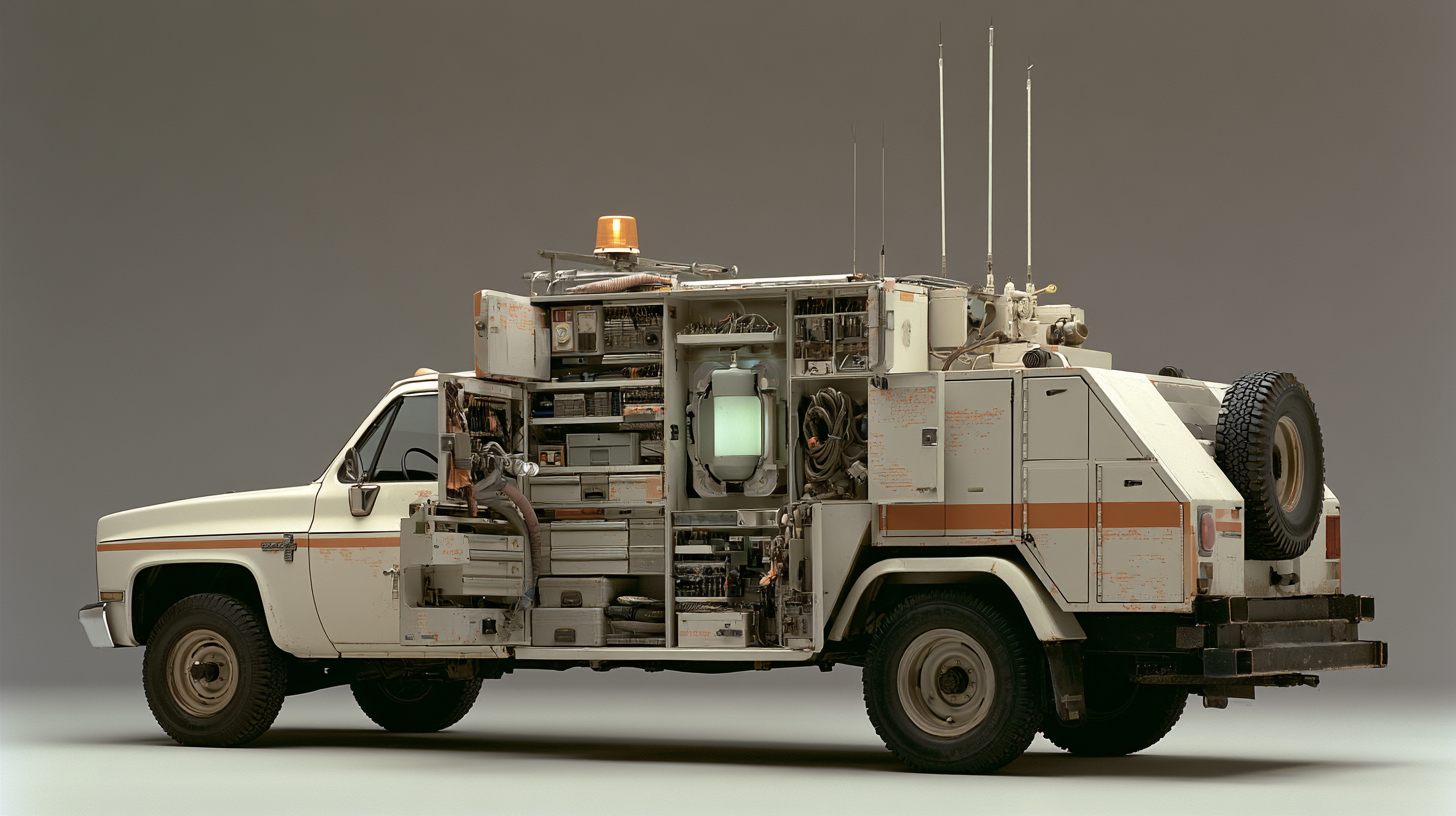
Every compartment door on the service body sits flush and latches on the first try. Inside, the tools hang on painted outlines, so a missing wrench announces itself from ten feet away. There is a logbook strapped to the inside of the driver door, and it is current.
The rear compartment is the one nobody opens. It is welded, not latched, and there is a thin green line at the seam where the light gets out. Not bright, and it does not flicker. It has been the same green since before anyone in this town was born.
Sergeant Ilo Manns is here to look at Machine Six, which has been quiet for six years and which the GPF services anyway, on schedule, twice a year, forever. She checks fourteen torque values, writes down all fourteen, greases what needs grease, and drives away.
A kid follows her back to the truck and asks what is in the welded compartment.
Manns thinks about lying. Then she says, "Nobody alive knows. Somebody sealed it right, and every single time anyone has tried to find out, they killed it and usually themselves. So we keep it shut, we keep it cool, and we keep it moving."
The kid asks why bother, if the machines are dead.
"They went quiet," Manns says. "That is not the same word."
Reference images
Out of world
What it is
An 1980s Chevy squarebody with a scratchbuilt service body, carrying one sealed Longlight module. The build teaches restraint, which is harder than weathering.
Donor kits
- Base: AK Interactive M1008 Troop Carrier (AK35030), or the M1008 Troop Carrier with Tarp (AK35031), in 1/35. The M1008 is the military version of the 1980s Chevy squarebody, so you get the right truck without rescaling a 1/25 car kit into a 1/35 scene. A Revell or AMT 1/25 Chevrolet C-series pickup still works if you are building in 1/25.
- Service body: sheet styrene, .020 and .040. This part is scratchbuilt, and it is the point of the build.
- Module: a small canister turned from tube stock or printed in clear resin.
- Lighting: one green LED, a coin cell, and thin magnet wire.
The build
- 01
Bin the pickup bed
Cut it off at the frame. You are replacing it entirely, so do not agonize over a clean cut. Just get it off and get the frame flat.
- 02
Build the service body as a box first
Floor, two sides, front, rear. Get the box square before you add a single detail, and check it against the cab for height and width. A service body that is a hair too tall reads as wrong even to people who could not tell you why.
- 03
Add compartment doors as separate panels
Do not scribe them. Cut individual door panels from thinner sheet and lay them on top with a hairline gap. Real doors sit proud of the body, and that shadow line is what sells it.
- 04
Open three bays, close the rest
Reference art for these trucks shows every compartment open and packed, and that is a trap. Detail three or four bays properly and leave every other door shut. The closed doors imply the rest, and you will actually finish the model.
- 05
Add hardware last
Latches from wire, hinges from strip, a drip rail along the top edge, a step bumper at the rear, a spare tire mounted vertically on the back. Small parts, big payoff.
- 06
Build the module compartment differently from the rest
No latch. Lay weld beads along the seam using stretched sprue softened with liquid cement and stippled with a blade tip. It should look like a decision somebody made permanently.
- 07
Light the seam, not the model
Seal the LED fully inside the compartment and let light escape only at the seam. If you can see the LED, you have failed. Green, dim, steady, and one of them. Do not add a flicker circuit and do not light any other bay.
- 08
Paint clean, weather selectively
This is the whole GPF lesson. Gloss white body, polished, with a narrow orange stripe and small orange stencils. Add one hand feathered touch up patch in a slightly off white near a door edge. Then weather only the frame, the underside, the wheel wells, and the step. Chips on the door handles and the rear corners, nowhere else.
- 09
Shadow board the tools
Paint tool outlines inside one open compartment and hang tiny tools on them. One board is enough. It implies every compartment you did not build.
- 10
Mark it properly
A stenciled unit number, a service date block, and a small painted over patch where an older number used to be.
Make it yours
Any utility truck works, a boom truck, a fuel truck, a wrecker. The lesson is that one clean vehicle in a filthy world reads as authority, and you get that read by weathering less, not more. Keep the glow rare. If your other builds already carry modules, this one probably should not.